The Importance of Sangha

The Importance of Sangha
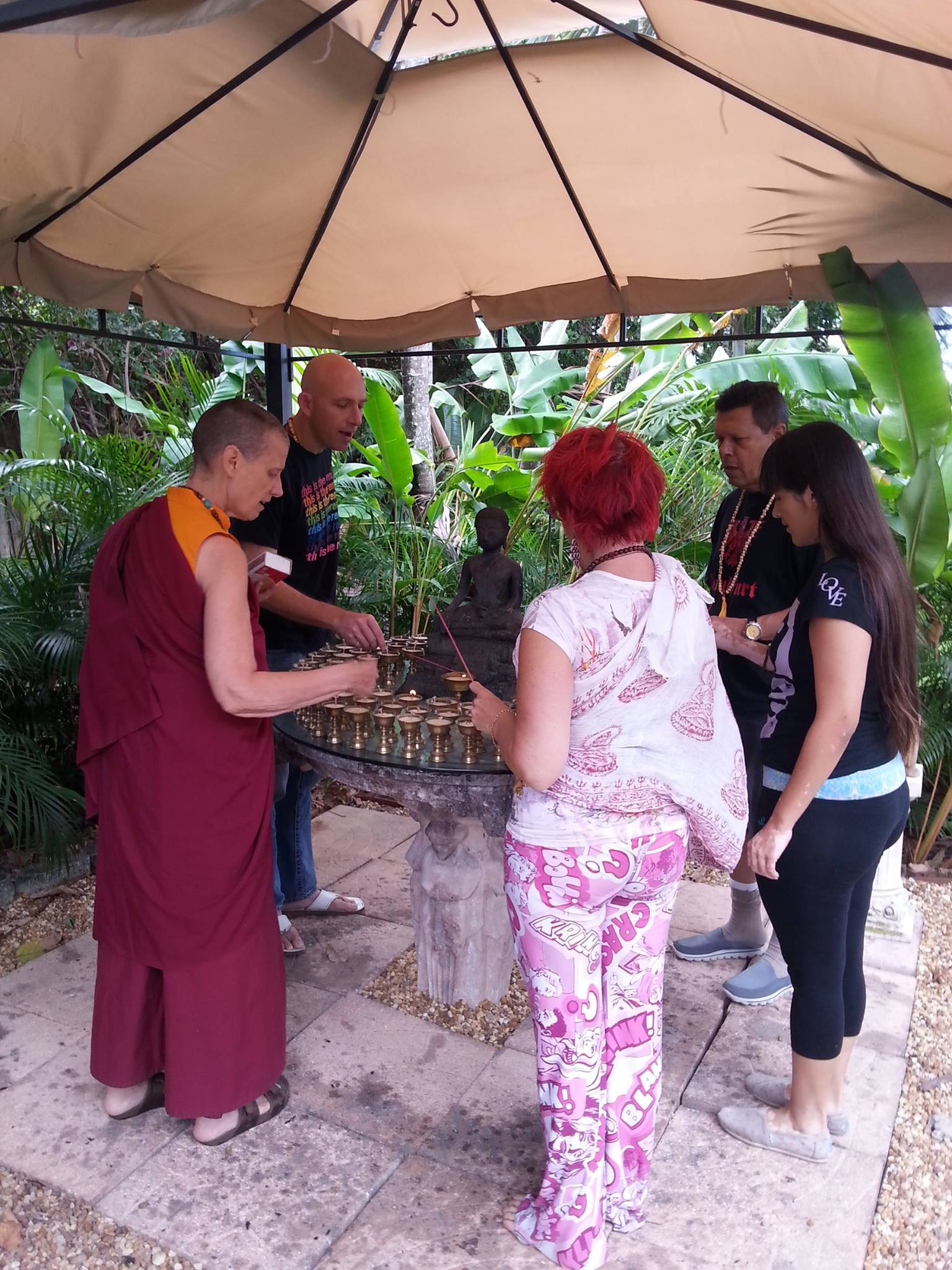
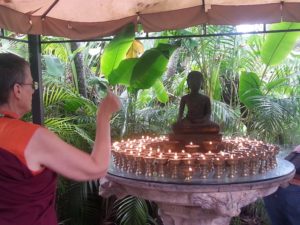
Butterlamps Prayers at Open Awareness Buddhsit Center - MiamiBuddhism.com

At the beginning of most sutras we find reference made to the location of the particular teaching, to who and, possibly, how many gathered to hear the teaching. Those who gathered and listened to the Buddha were the first Sangha, the assembly of disciples who practiced what he taught. Without them, there would have been no teaching.

The Tibetan word for Sangha is gendun. According to the dictionary, ge  (or gewa) means virtue and dun (or du pa) means to desire. So gendun refers to those who want or those who practice virtue or, let’s say, those who go after virtue. They are the ones who, according to Kalu Rinpoche in Luminous Mind, “study, practice and transmit the words and experience of the Dharma.”

There are two types of Sangha: the Arya Sangha or the Noble Assembly of Bodhisattvas and Arhats, the third of the Three Jewels in which we take refuge every day; and the Sangha of ordinary people, monks and nuns who have not yet reached these stages of realization but who are practicing on the path. Of course, the sangha of ordinary people is the one we are part of today.

Its importance cannot be emphasized enough.

When I first began teaching in South Florida, there was no sangha here. A few people gathered once a week, seldom the same people, and often teachings were given at the beach because there was no other place for us to meet. Everything that has developed since could not have happened without people who made the commitment to learn and to try their best to practice the ways of virtue as taught by the Buddha. As our sangha has developed, many changes have occurred, some of which came about due to members’ negative responses to various situations. We all have been a little spoiled by living in such a rich country and we have quite an “attitude.” We have definite likes and dislikes and very little patience. We are used to criticizing others at the drop of a hat and have little training in being supportive. We come to the Dharma with great attachment to our opinions and our ways, not realizing that living “our way” has only led to suffering.

What is wonderful is that we have come to the Dharma to learn how to transform our own negativities and have a positive perspective. That takes time, and while we are working on it we will make mistakes. But we must try to work on our attitude towards each other with great sincerity and daily remember our commitment to the teachings of compassion and selflessness.

It is difficult to keep that commitment in the midst of hard work requiring skill in communication to avoid misunderstanding. It is also difficult to practice patience for the first time in situations when we normally would simply walk out. But within the sangha, members are forming relationships that last for lifetimes. This is not an ordinary situation and calls for extraordinary respect for those who are trying to accomplish just what you are trying to accomplish.

So this is not the place to express anger, impatience, jealousy or disrespect. Whenever you need to reinforce the respect and care we want to give one another, look at the many things we accomplish just because we are a group.

For one thing, if it weren’t for other sangha members you would not be able to receive teachings as there would be no support for a resident teacher or for visiting lamas. It would also be very difficult to run a center all by oneself. But besides many obvious physical/financial reasons, there is the more elusive reason for the importance of the sangha — support for the practice of Dharma.

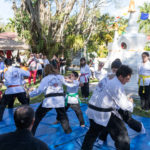
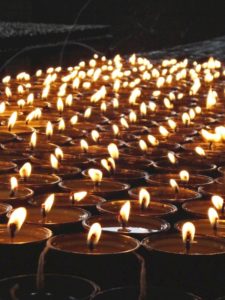
When we meditate as a group it is more powerful than when we meditate on our own. We are more diligent, more focused when together, allowing for longer periods of deeper concentration. As with the butterlamps we offer every week, to offer just one lamp is not as powerful as offering 100 lamps all together. Together the light is stronger, the heat more intense, the effect more striking and longer lasting.

So now we are all part of a tradition that spans over 2,500 years, a tradition of people coming together in harmony to practice what the Buddha taught in order to relieve the suffering of all sentient beings. We are gendun, we are going after virtue, and we should find only the greatest joy in accompanying one another on this path.

By Lama Karma Chotso

Butterlamps Offering

The Great Benefit of Offering Butterlamps

Butterlamp Offering at Open Awareness Buddhist Center - miamibuddhism.com
Butterlamp Offering

In general, making offerings is an extremely important method for the practitioner to accumulate merit. The attainment of the state of enlightenment occurs when we have brought to full perfection our accumulation of merit. In particular, the method of offering bowls of saffron water is an excellent way of accumulating merit because it is an act of generosity in which you have no greed. You don’t have any particular attachment to the water, so it is a way to offer that which we have no concept of possessing. It is also excellent to offer the butterlamps, candles or light because this act of offering this light symbolizes burning away our mental afflictions of desire, aggression, greed, jealousy, pride and so forth.

Butterlamps Offering by Lama Karma Chotso


The other part of the symbolism is that it is a way to burn away our illness. In the Tibetan medical tradition, physical illness is based on an imbalance of the elements in the body, illness is seen as an imbalance between wind, bile and phlegm. When these are out of balance sickness arises in the body. So this offering symbolizes burning away illness. In general, making offerings such as these with a good attitude is an excellent means for accumulating an enormous amount of merit. It is particularly meritorious for us because we are very fortunate to be part of a lineage of great masters who made these types of offerings. For example, my and our own root Lama, the Very Venerable Kalu Rinpoche, made it his particular special offering to offer a lot of butterlamps and offered 100 every day.  Then Deshun Rinpoche, who was also a very important to me in my own training, was incomparable in his offering of the bowls of saffron water. Because we are part of this lineage, it makes the merit even stronger.

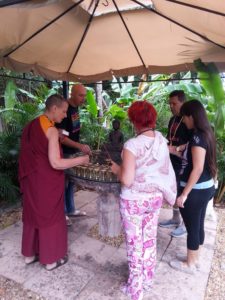
Butterlamps Prayers at Open Awareness Buddhsit Center - MiamiBuddhism.com
Butterlamps Prayers at Open Awareness Buddhsit Center – MiamiBuddhism.com on Sundays

If you are just doing something ordinary but you have a lot of support, you have a lot of people behind you, you have a lot of money, you have power behind you, it is easier to accomplish your aims. It is the same thing to rely on an authentic lineage. That is the support we need to bring our practice to fruition.
by Lama Norlha Rinpoche

Butterlamp Prayer – $1

Donate Butterlamps to any being in need of prayer. These prayers are said every Sunday by the Sangha and are a powerful influence on those sentient beings dedicated during the Butterlamp offerings. Please donate $1 for each butterlamp.


Prayer:
Prayer:


Dharma

Open Awareness Buddhist Center Featured Wide
Wheel of Dharma MiamiBuddhism.com Open Awareness Buddhist Center
The Wheel of Dharma

Dharma refers to the second gem of the Three Jewels of Buddhism: Buddha, dharma, sangha. The word is defined as the teachings of the Buddha.

Dharma also supports the practice of those who are in harmony with it.

Mahamudra in 28 Verses

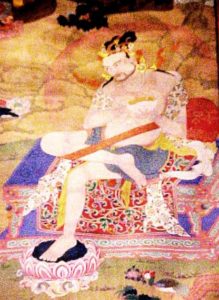
Sri Tilopa
Sri Tilopa

Homage to the Vajra Dakini!

Mahamudra is beyond description
But for your sake, O Naropa, my most devoted disciple,
who is diligent in ascetic practice and exertion,
this shall be said:

Space lacks any locality at all.
Likewise, Mahamudra rests on naught.
Thus, without making effort, abide in the pure primordial state,
and the fetters that bind you will simply drop away.

Just as when looking into the open sky,
fixed concepts of centre and circumference dissolve,
So, if with mind one perceives the mind, mental activity ceases; then is it, that Enlightened-mind is realized.

Clouds that arise and take form in the sky,
pass away quite automatically according to natural law.
Likewise, the flow of concepts arising in the mind,
naturally pass away when mind perceives mind.

Space has neither shape nor colour;
it is changeless, and not tinged by either white or black.
Likewise, mind-in-itself has neither form nor colour,
nor can it be stained by virtue or vice.

The burning stellar radiance of the sun
can not be covered by the eternal darkness of space.
Likewise the luminous essence of mind
can not be shrouded by Samsara’s endless duration.

Though we say that space is empty,
the actual nature of this vacuity defies description.
Though we say that mind is luminous,
it is actually beyond all words and concepts.
In that mind is like space, it encompasses all.
Therefore cease with bodily movement and sit relaxed;
close your mouth and simply remain in silence;
empty your mind and leap beyond the phenomenal!

Let the body rest at ease, insubstantial like a bamboo tube.
Let the mind rest in itself, spacious and un-preoccupied with thought.
When the mind is not possessed by aims, that is Mahamudra.
When this is realized, that is Great Enlightenment!

Adherents of the Tantra and of the Mahayana,
of the Vinaya and Sutra, and the followers of the World Religions,
with all their various scholastic theologies and devotions,
have no idea whatsoever of this wondrous simultaneously-born Mahamudra.

As to the keeping of covenant-vows (samaya), they are broken
only by the act of trying to adhere to them. The light is hidden only by striving to know it. Cease with rules and ritual, abandon volition, stray not from the Ultimate, and then a true Precept-keeper will you be, a lamp illuminating the darkness.
Not caught up in perceptions, nor caught in desire,
seeking nothing, abiding in the self alone, one simply lets
consciousness be, like a wave in the Great Ocean.

If you slip not into conation, if you hold to neither this nor that,
the real meaning behind all the Scriptures, will make itself clear.
Just abiding, one is released from the prison of Samsara.
Just abiding, all one’s karmic impurities are burned away.
It is then that you shall be known as a “Lamp of the Teaching”.

Even the ignorant who understand not Mahamudra,
and fools who are lost for a time in Samsara,
can be saved if they but rely on a holy Lord (guru).
Through grace (adhisthana) they may be sure of deliverance.

Know all the phenomena of Samsara as worthless;
just the cause of attachment and aversion.
All created phenomena are without real substance,
therefore seek instead the nature of the Ultimate.

Non-duality is the King of Views.
Resting the mind without flux is the King of Meditations.
Not choosing this or that is the King of Conduct.
When there is neither hope nor fear, that is the King of Results.

Once you let go of all objects-of-perception,
the true nature of the mind shines forth.
Not trying to meditate is the supreme path of the Buddha.
By the meditation of non-meditation Enlightenment is won.

Alas! Impermanent is this world.
It passes like a mirage or a dream.
Even the illusion of its existence
is not something that exists.
Moved by weariness, abandon worldly pre-occupation.

Renounce distinctions of class and race,
and meditate alone in forest, mountains and solitary places.
Abide without seeking; loosely remaining in the natural state.
By attaining non-attainment, quickly shalt thou reach the state of Mahamudra.

If you sever the main root of a living tree,
then all the many branches wither and die at once.
Cut through (kathinaccheda) the very root of consciousness,
and all mental projections will immediately cease.

The darkness of long ages is dispelled
instantly by the lighting of a single lamp.
One moment’s experience of the mind of Clear Light
immediately rends the veil of ignorance for ever.

Aha! That which pertains to consciousness is unable to perceive transcendental Gnosis (jnana).
That which pertains to created phenomena is unable to perceive the uncreated Reality.
If you would attain the transcendent, beyond consciousness and creation;
then look directly into one’s own mind, until awareness is revealed in its bare nakedness.

Let the polluted pool of mental activity clear itself.
Merely watch the flow, just as it is.
Do not engage with appearances as they arise,
for Mahamudra is beyond acceptance and rejection.

Since the fundamental ground (alaya) is unborn,
it can neither be obscured nor defiled.
Just rest in the unborn state, neither meditating nor not-meditating, letting appearances resolve back into Ultimate Reality (dharmata).

In being free of the extremes, one attains the King of Views.
Entering the vast and deep, one attains the King of Meditations.
Not making an effort, one attains the King of Conduct.
In non-seeking awareness, one attains the King of Results.

At first the yogi feels his mind to be turbulent,
like the upper course of a rushing mountain torrent.
Then it becomes smooth like the broad river Ganges.
In the end it is like entering the ocean, a child returning to the mother.

One who wishes to attain this level of meditation
should first begin by practicing remembrance of the breath.
Through control of the gaze and such exercises,
the mind will be disciplined until it abides in its own state.

Now concerning the practice of Karmamudra,
the union of Wisdom (prajna) and Means (upaya):
draw down and blend, then raise it up to the source.
Finally cause it to saturate the entire body.
If this is performed free of lust, then Bliss-Emptiness is attained.

Glowing inwardly, blessed with renewed vigour and vitality,
thy life-power shall expand like the waxing moon.
Radiant and healthy, with the composure of a lion,
thou shalt attain Accomplishment (siddhi), both mundane and supreme.


Colophon

By virtue of entering this practice, may all obstacles to the realization of Mahamudra dissolve away.
May the Clear Light of Mahamudra dawn in the minds of the practitioners.
May this Pith Instruction on Mahamudra come to abide in the hearts of those disciples fortunate to connect with it.

This pith-instruction on Mahamudra in 28 Verses was given by Sri Tilopa to Mahapandita Nadapada on the banks of the Ganges River. It was translated into Tibetan from the Sanskrit by Marpa Cho-kyi-lodro, and is now presented in English by the Dharma Fellowship. The origial text may be found in the Do.ha. mdzod. brgyad. ces.bya.ba. phyag. rgya. chen. po’i. man.ngag. gsal.bar. ston.pa’i. gzhung., printed at the Rumtek monastery of His Holiness the Gyalwa Karmapa, in Sikkhim.